Before you go
Best Time to Visit Bosnia: A Season by Season Guide
Bosnia has four real seasons and two distinct climates within a small area. The right time to visit depends on what you want from the trip.
The short version
Late April through June, and September into early October, are the most comfortable windows for most trips: warm days, cool nights, green landscapes and manageable crowds. July and August are the busiest and hottest months, especially in Herzegovina. Winter is genuinely worth considering if skiing or a quieter Sarajevo appeal to you, rather than a season to avoid.
Two climates in one small country
Bosnia's geography splits the country into two climates that sit close together on a map but feel quite different on the ground. Herzegovina, in the south around Mostar and Trebinje, has a Mediterranean climate: hot, dry summers with long sun, and mild winters closer to the Adriatic coast than to central Europe. Central and northern Bosnia, including Sarajevo, Jajce, Travnik and Banja Luka, have a continental climate with real winters, cold enough for regular snow, and summers that are warm but rarely as intense as Herzegovina's.
The practical effect is that a trip combining both regions can feel like moving between two countries. In May, Mostar might already be warm enough for shorts and sandals while Sarajevo is still cool in the evenings. In November, Herzegovina can still have mild afternoons while the mountains above Sarajevo already carry snow.
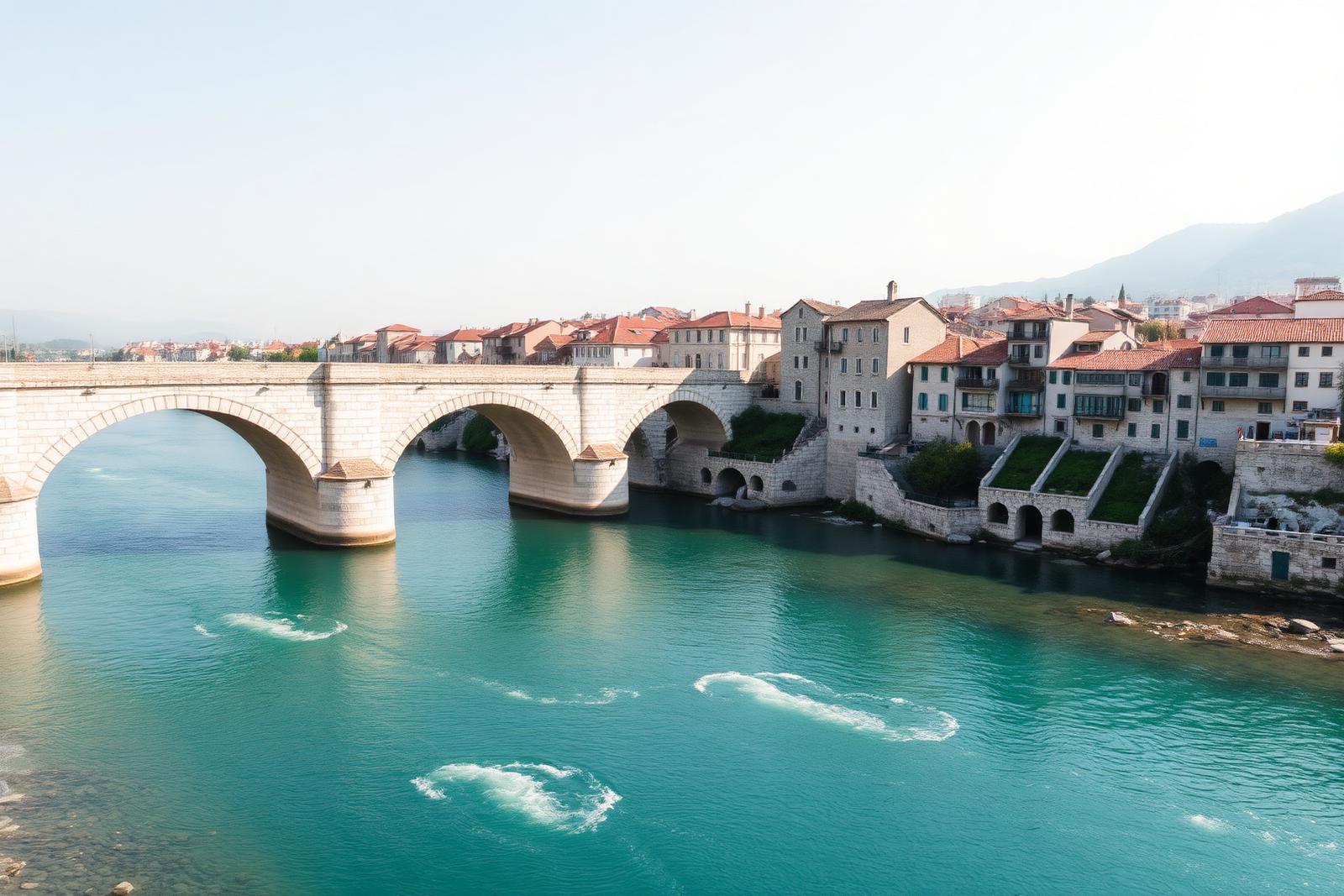
Spring: April to June
Spring is one of the two best windows for a first trip. Rivers and waterfalls, including Kravice and the Una, run fullest after winter snowmelt, hillsides are green, and daytime temperatures are comfortable for walking cities and hiking without the summer heat. April can still be unsettled with rain, particularly in central Bosnia, but by May the weather is generally reliable. June is warm, long days and still short of the peak season crowds that arrive in July.
Summer: July and August
This is peak season and the hottest stretch of the year, especially in Herzegovina where daytime temperatures regularly climb into the mid thirties Celsius. Mostar's old town is at its busiest and warmest in the middle of the day, and river spots like Kravice draw the largest crowds. Central Bosnia and Sarajevo stay noticeably cooler because of altitude, which is part of why many Bosnians spend August in the mountains rather than the south. If you travel in summer, plan to see Herzegovina's outdoor sights early or late in the day and treat the middle hours as downtime near water or in the shade.
Autumn: September and October
The second best window, and arguably the better one for photography. September carries summer's warmth without the peak crowds, rivers are lower but towns are calmer, and early October brings the first real autumn colour to the forests around Sutjeska and central Bosnia. By late October, evenings turn cold in the mountains and some rural guesthouses start to close for the season, so this is a good window to travel in but a poor one to arrive without checking ahead.
Winter: November to March
Winter is a legitimate season to visit rather than a gap in the calendar. Sarajevo, which hosted the 1984 Winter Olympics, has ski resorts on Bjelasnica and Jahorina within about half an hour of the city, and the combination of a walkable old town with nearby skiing is unusual in Europe at this scale. Snow is reliable in the mountains from December through February. The trade off is shorter days, colder nights and the chance of winter smog settling in the Sarajevo valley when the air stagnates for several days at a time.
Herzegovina in winter is milder and can be a pleasant contrast: Mostar and Trebinje rarely see snow and afternoons are often comfortable enough for walking without heavy layers, even in January.
Month by month at a glance
- January to February
- Ski season in the mountains, mild in Herzegovina, cold and sometimes smoggy in Sarajevo
- March
- Transitional, still cold in the north, first mild days in the south
- April
- Green and improving, some rain, waterfalls at their fullest
- May
- Reliable and comfortable across the country, one of the best months
- June
- Warm, long days, before the peak summer crowds arrive
- July
- Hot in Herzegovina, warm in the centre, peak season crowds
- August
- Hottest month, busiest in Mostar and Herzegovina river spots
- September
- Warm and calmer, arguably the best all round month
- October
- Autumn colour, cooling evenings, some rural closures late in the month
- November
- Cold and wet in the north, mild and quiet in Herzegovina
- December
- Early ski season, festive but cold in Sarajevo
Shoulder seasons for specific trips
If your priority is hiking in Sutjeska or Una national park, aim for June through September when trails are clear and mountain huts and rural guesthouses are open. If you want Mostar and the river towns without the summer crowds, May or September is the better call than July or August. If skiing is the goal, target January and February for the most reliable snow, and treat Sarajevo's old town as a bonus rather than the main event on that kind of trip.
How this affects your route
Season should shape the order of a Bosnia trip as much as geography does. A summer itinerary is better run from the cooler centre toward Herzegovina in the last few days, ending near water. A winter itinerary works better centred on Sarajevo, with Herzegovina as a milder add on rather than the main focus. This is one of the things we adjust automatically when building a route in the Bosnia Trip Planner.
Related guides
Get a route built for your travel dates.
Tell us when you are coming and we will order your trip around the season, from which region to prioritise to how to pace each day.
Plan My Bosnia Trip, €49