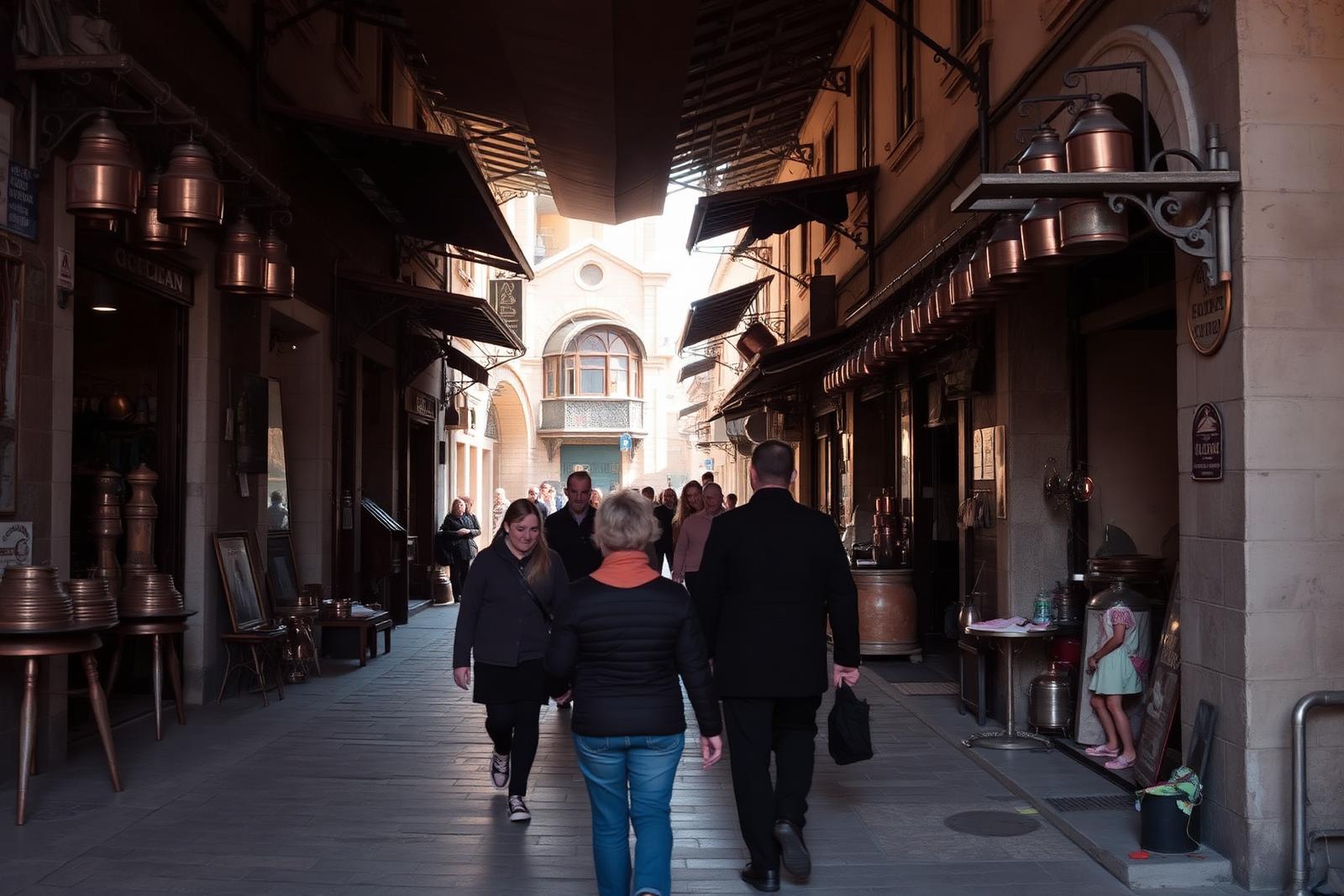
Sarajevo, Central Bosnia
Sarajevo Travel Guide
The capital sits in a narrow valley, which is why it is walkable, why the light changes so quickly and why the hills are never far from the centre.
Sarajevo at a glance
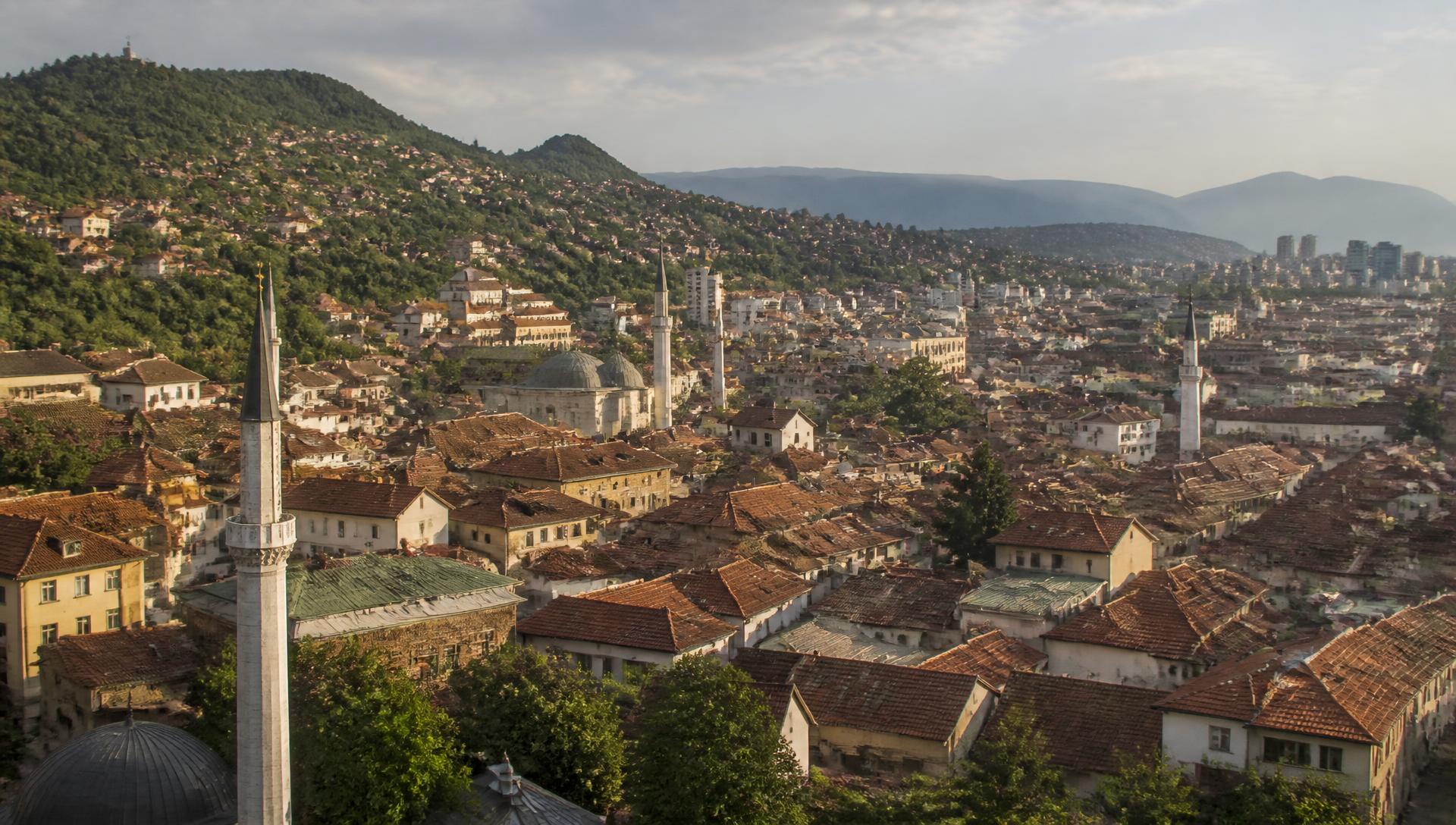
Sarajevo is the capital and the largest city in Bosnia and Herzegovina, set along the Miljacka river between steep hills. Almost everything a visitor wants is in a strip about two kilometres long: the Ottoman era bazaar quarter of Bascarsija at the eastern end, the Austro-Hungarian centre west of it, then the modern city continuing along the valley toward the airport.
Because of that shape you can cover the historic core on foot in a day. What takes longer is the rest of it: the tunnel museum near the airport, the viewpoints above the city, the mountains that hosted the 1984 Winter Olympics and the cafes where people actually spend their afternoons.
Useful facts
- Region
- Central Bosnia, in the Miljacka valley
- Airport
- Sarajevo International Airport (SJJ), about 10 km from the centre
- Suggested stay
- Two to three nights, more if you use it as a base
- Currency
- Convertible mark (BAM), pegged to the euro
- Getting around
- Walkable centre, trams and trolleybuses, taxis and ride apps
Why visit Sarajevo?
Sarajevo is the clearest place in Europe to see four periods stacked on one street. Walking west from Bascarsija you pass Ottoman mosques and a caravanserai, then Habsburg facades, then socialist era blocks, in a few hundred metres. There is a marker on the pavement where the two halves meet.
- History that is legible on foot rather than only in museums, from the Ottoman period through 1914 to the siege of the 1990s
- A genuine coffee and food culture, and prices well below western Europe
- Mountains inside the city limits, with cable car access to Trebevic
- A base for day trips to Konjic, Travnik, Visoko and the Bjelasnica villages
How long should you spend in Sarajevo?
Two nights is the practical minimum and covers the old town, the Austro-Hungarian centre, one museum and one viewpoint. Three nights lets you add the tunnel museum and either Trebevic or a half day in the mountains without rushing.
Four or more nights makes sense if you want day trips. Konjic and the Neretva are about an hour away, Travnik and Jajce are reachable in a day if you drive, and Bjelasnica villages are close enough for an afternoon. If you only have a week in the country, three nights here and the rest further south is usually the better split.
Best things to do in Sarajevo
- Walk Bascarsija early, before the day groups arrive, and again after dark when the copper workshops are shut and the square is quieter
- Follow Ferhadija from the bazaar to the cathedral, the point where Ottoman and Habsburg Sarajevo meet
- Visit the Tunnel of Hope museum near the airport for the clearest explanation of how the city functioned during the siege
- Ride the Trebevic cable car for the view back down the valley, and walk part of the abandoned bobsleigh track
- Spend an hour in the Latin Bridge area, where the 1914 assassination took place, then continue to the City Hall
- Drink coffee properly at least once: served in a dzezva, with the sugar and the water, not rushed
- Eat cevapi in the old town and burek from a bakery in the morning rather than at dinner
- Walk up to the Yellow Fortress or Kovaci for the view, particularly in the last hour of light
Where to stay in Sarajevo
We do not book accommodation, so this is about which part of the city suits which kind of trip rather than specific properties.
- Bascarsija and around: closest to the sights and the evening atmosphere, mostly small hotels and apartments. Noisier in summer, and cars are awkward.
- The Austro-Hungarian centre around Ferhadija and Marijin Dvor: larger hotels, still walkable to the old town, easier if you arrive late or leave early.
- Along the Miljacka toward Skenderija: quieter apartments a short walk from everything, usually better value.
- Ilidza, near the airport: worth considering only if you have a car and want parking, or if you are catching an early flight.
Apartments are common and often better value than hotels for two people or more. If you are driving, confirm parking before you book. Streets in the old town are narrow and many are pedestrian only.
For a country wide view, see where to stay in Bosnia.
Getting to Sarajevo
Sarajevo International Airport is about ten kilometres from the centre and takes 20 to 30 minutes by taxi. It is served by a modest number of European routes, so many travellers arrive instead through Zagreb, Split, Dubrovnik or Belgrade and continue overland.
- By bus: regular services from Mostar, Banja Luka, Belgrade, Zagreb, Split and Dubrovnik. Sarajevo has two bus stations, one in the centre and one in East Sarajevo, and which one you use depends on the operator.
- By car: the motorway from the north reaches part of the way, and the rest is main road through the mountains. Allow more time than the distance suggests.
- By train: the Sarajevo to Mostar and Sarajevo to Capljina line is a scenic ride along the Neretva, though it runs only a couple of times a day.
Route by route detail is in how to get around Bosnia.
How Sarajevo fits into a Bosnia itinerary
Most routes start or end here. The natural line is Sarajevo to Mostar and on through Herzegovina, which works in either direction and needs no backtracking. If you arrive from Zagreb, the sensible order is Banja Luka or Una, then Jajce, then Sarajevo, then south.
The 7 day Bosnia itinerary uses Sarajevo as the first three nights. Shorter trips can still work with two nights here and two in Mostar.
Best time to visit Sarajevo
May, June, September and early October are the most comfortable months: warm days, cool evenings and a city that is busy without being crowded. July and August are hot in the valley and the old town fills up in the middle of the day.
Winter is a real season here rather than an off season. Snow is normal, the ski mountains are half an hour away and the city is at its quietest. Note that Sarajevo can hold winter smog for days when the air stagnates in the valley.
Sarajevo travel tips
- Cash is still useful. Cards work in hotels and larger restaurants, less reliably in bakeries, small cafes and markets.
- Bascarsija is quiet in the early morning and again late in the evening. Plan photographs around those hours in summer.
- Mosques and churches are open to visitors outside prayer times. Dress modestly and check the posted hours.
- Distances on the map are misleading uphill. The climb to the fortress and viewpoints is steeper than it looks.
- Taxi apps work well in the city and remove the need to negotiate.
Related Bosnia destinations
Plan your Bosnia trip around Sarajevo.
Tell us your dates and your arrival point. We will decide how many nights Sarajevo deserves in your trip and what belongs around it.
Plan My Bosnia Trip, €49